
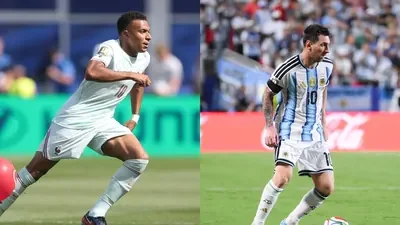
Spain ended the 2026 FIFA World Cup as its most complete team, defeating defending champions Argentina 1-0 after extra time to claim their second world title. Luis de la Fuente’s side controlled more than 65 per cent possession, registered 12 shots on target and completed over twice as many passes as Argentina in the final, eventually breaking through when substitutes Nico Williams and Ferran Torres combined for the winning goal.
Event Context
The right-back position goes to Pedro Porro, who scored twice during the tournament. His second goal came in the semi-final against France, when he surged into the penalty area and finished the move that effectively secured Spain’s place in the final. His attacking productivity, combined with Spain’s defensive record, separates him from the other candidates.
Pau Cubarsi and Aymeric Laporte form the central-defensive partnership. Cubarsi was named the tournament’s Best Young Player after establishing himself at the heart of the competition’s strongest defence. His calmness was particularly evident in the final, where he completed 96 per cent of his passes and drew the foul that resulted in Enzo Fernández’s second yellow card.
Rodri’s protection permits Michael Olise and Declan Rice to operate as the two No. 8s. Olise recorded seven assists, the most ever by a player in a single World Cup edition, and became France’s primary creative outlet during their run to the semi-finals.
Rice supplies the balance. England finished third after reaching the semi-finals, and Rice combined ball-winning work with a growing attacking contribution, including a goal in the remarkable 6-4 victory over France in the bronze-medal match. His presence prevents a midfield containing Olise and Bellingham from becoming structurally reckless.
Also Read: Pele and Maradona would’ve argued over his greatness, but Lionel Messi’s final World Cup has left no room for doubt
Messi and Mbappé form an irresistible attack
That dominance is reflected in this Team of the Tournament. Six Spanish players make the XI, including the Golden Ball, Golden Glove and Best Young Player winners. However, the tournament’s two most devastating attackers – Kylian Mbappé and Lionel Messi -lead the line.
The formation is a 4-1-2-1-2 diamond, designed to accommodate Messi and Mbappé centrally, keep Jude Bellingham in his most destructive attacking-midfield role and position Rodri at the base of the side.
Team: Unai Simón; Pedro Porro, Pau Cubarsí, Aymeric Laporte, Marc Cucurella; Rodri (c); Michael Olise, Declan Rice; Jude Bellingham; Lionel Messi, Kylian Mbappé.
Marc Cucurella must be used on the left, where he played throughout Spain’s campaign. Cucurella started every match, supplied two assists against Austria, and gave Spain intensity both in and out of possession. His ability to advance, recover and defend aggressively allowed Spain to maintain their territorial pressure.
Laporte provided the experience, left-footed distribution and positional security alongside him. Their partnership gave Spain the platform from which Rodri and the attacking players could control matches without leaving the side exposed.
Ahead of them, Jude Bellingham takes the No. 10 position after scoring seven goals – the highest total by an England men’s player at a single major tournament. His late strike against France took him beyond the previous national record and secured the Bronze Boot.W
The forward positions belong to the two players who defined the scoring race.
Lionel Messi carried Argentina to another final with eight goals and four assists. His two assists in the semi-final against England took him to 12 World Cup assists and helped Argentina overturn an early deficit. Even at 39, he remained the tournament’s central creative force as well as its second-highest scorer.
Alongside him is Golden Boot winner Kylian Mbappé, who finished with 10 goals and four assists. He entered the third-place match level with Messi on eight goals before scoring twice against England, completing the tournament as its leading scorer despite France falling short of the final.
Messi would drop between the lines and construct attacks; Mbappé would stretch the defensive line and attack the space beyond it. Behind them, Bellingham would make late runs into the penalty area, while Olise and Porro provide width on the right, and Cucurella advances from the left.
It is a team shaped by Spain’s control, England and France’s attacking output, and Argentina’s final run – with Rodri as its organiser and Messi and Mbappé as its decisive weapons.
Spain’s defence provides the foundation
Unai Simón is the straightforward choice in goal. Spain’s goalkeeper won the Golden Glove after helping the champions record six clean sheets during an extraordinary defensive campaign. Spain conceded only once across eight matches, shutting out Portugal, France and Argentina during the knockout rounds.
Every part of this team revolves around Rodri. The Golden Ball winner completed 756 passes at 93.2 per cent accuracy, made 26 tackles and recorded 40 recoveries across Spain’s eight matches. He also created 11 chances and was dispossessed only four times despite constantly receiving the ball in congested areas.
