
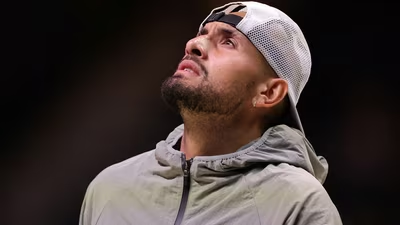
He once refused to apologise to Rafael Nadal after hitting the Spaniard with a dangerous shot during their 2019 Wimbledon match, and questioned why he should have to when asked about it at the post-match press conference. Nick Kyrgios has always been the outspoken rebel of tennis, at times even crossing the line between right and wrong. At other times, however, Kyrgios has addressed issues more forcefully than many players on the circuit might, particularly when tennis was rocked by not one but two doping cases two years ago. He questioned how those cases had been handled and made it clear where he stood.
Kyrgios will be hoping the tennis world can put the episode behind him, show some understanding of his situation and allow him to move forward. But for the self-styled bad boy of tennis, who has rarely missed an opportunity to criticise others caught up in doping cases, he should expect the scrutiny to be intense. Within minutes of the news spreading across social media, Kyrgios released a statement on Instagram apologising for his actions and explaining how his injury-riddled career — he has played at just eight tournaments since 2023 — had taken a huge toll on him, both physically and mentally, and contributed to his mistake.
The ITIA said the former world No. 13 could appeal against the provisional suspension, “but has not done so to date”. On Wednesday, his old remarks about those cases came back to haunt him after he was provisionally suspended for testing positive for cocaine, following a sample collected at an event in Mallorca in June this year, according to the International Tennis Integrity Agency (ITIA).
But perhaps Kyrgios’ sharpest criticism was reserved for Jannik Sinner, who twice tested positive for clostebol, an anabolic steroid. The amount detected in the two tests was tiny. This is where the story becomes uncomfortable for Kyrgios. The circumstances of the various cases were different, and his own matter has yet to reach a final conclusion. But the player who left little room for nuance when discussing others is now being forced to confront the same questions himself. The larger reality is that Kyrgios has never been a player who consistently maintained the level of professionalism expected of him, either on or off the court.
An independent tribunal, however, ruled that Sinner bore “no fault or negligence”, accepting that the substance had entered his system through accidental contamination involving a member of his support team. “I would never even in my entire life ever try and dope in this sport,” he said, pointing out that he too had spent years dealing with injuries and could have used prohibited substances to accelerate his recovery. He went further, arguing that anyone who had “tried to cheat the process” was disrespecting the sport. His career has been punctuated by incidents that have repeatedly raised questions about his behaviour, from the 2015 suspension for his lewd remarks about Stan Wawrinka’s girlfriend during a match in Montreal to his 16-week ban in 2019 for a “pattern of behaviour related to his verbal abuse of officials and/or spectators”.
