
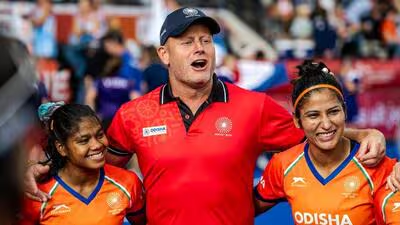
NEW DELHI : Not so long ago, the Indian women’s hockey team found itself at a difficult crossroad. Out of the Pro League, starved of top-flight international fixtures a year and reeling from the heartbreak of failing to qualify for the Paris Olympics, the squad was dogged by internal rifts and a fractured dressing room.
Against all odds, chief coach Sjoerd Marijne orchestrated a stunning turnaround, guiding the team to a brilliant fifth-place finish, India’s best show at the World Cup since the inaugural edition in 1974 when they finished fourth. This fortified support system provided a launchpad for the squad’s younger talent—11 World Cup debutants to be precise. Players like Sakshi Rana (23 international caps) and Lalthantluangi (6), who had scarcely played international hockey, found themselves seamlessly integrated into high-pressure roles, playing with freedom that contradicted their inexperience. The campaign’s crowning moment came in a resounding 3-1 victory over two-time world champions Germany, a team Marijne believed had the pedigree to reach the final four.
To mend a divided squad, Marijne cleared everything back to a single, uncompromising philosophy: the team comes first. “Focusing on team goals will help you achieve personal goals. But focusing on individual goals, you’ll never achieve team goals. We created unity. We created the belief that they can do more than they think. This decentralised leadership allowed different personalities to shoulder the burden. Navneet Kaur and Neha Goyal became the tactical voices on the pitch. match-by-match growth, Marijne knows the team needs to do a lot more if they are keen on performing at the same level consistently While satisfied with the team’s visible. If this World Cup campaign is any indication, Marijne’s culture of unity has not only restored the team’s belief, it has made them a formidable force for the Asian Games.
Goalkeeper Savita Punia focused on team bonding and leading by example while Nikki Pradhan and Sushila Chanu acted as crucial “connecting players”, keeping a close eye on teammates who might be struggling. “If you win 3-1 against a team of that quality, that’s a very big step,” said the 52-year-old.
